Market, limit, stop. Three order types cover 95 % of retail trading — including the stop-limit trap that catches most beginners.
This article is about the other 5 % — the conditional and algorithmic orders that sit unused in almost every retail platform. They are not more advanced in the sense of being harder. They are advanced in the sense of automating a decision you would otherwise have to be present to make.
That is their entire value proposition, and also where every one of them fails.
The mental model
Every advanced order is a rule of the form:
If condition X becomes true, send order Y — and optionally cancel order Z.
Once you see it that way, the list stops being intimidating. The only real questions are: what triggers it, what does it send, and who evaluates the condition — your broker's server, the exchange, or your own machine.
That last question matters more than the order type itself. An order held locally dies when your connection does.
OCO — One Cancels the Other
Two orders are submitted together. When one fills, the other is cancelled automatically.
The canonical use: a take-profit limit above and a stop below an open position. You cannot be wrong about which one triggers, and you cannot end up accidentally short after both fill.
When it helps. Any position you intend to leave unattended. Without OCO, a volatile move can fill your take-profit and then your stop, leaving you in a new position you never wanted.
How it fails. Partial fills. If your take-profit fills for half the size, broker implementations differ wildly on what happens to the stop — some resize it, some cancel it entirely, some leave it at full size, which flips you short on the remainder. Test this with minimum size before trusting it with real positions.
Bracket order
An entry order with its exit orders pre-attached. Submit one ticket, and the moment your entry fills, a take-profit and a stop appear automatically — usually as an OCO pair.
When it helps. This is the single most underused order type in retail trading, because it makes risk defined at the moment of entry structurally unavoidable. You cannot "forget" to place the stop. You cannot decide, forty minutes into a losing position, that the stop was too tight.
If you have ever widened a stop after entry, brackets are the fix. Not discipline — mechanics.
How it fails. It encodes your risk before you have any information about how the trade behaves. For strategies where the exit legitimately depends on post-entry price action, a bracket can lock you into a plan you would have been right to revise. Know which of the two problems you actually have.
Trailing stop
A stop that follows price at a fixed distance in your favour, and never moves against you.
When it helps. Trend-following, where you cannot know in advance where the move ends. It converts an open-ended target into a mechanical exit rule.
How it fails. Three ways, and all three are common.
The distance is arbitrary. A trail of 20 points means nothing without knowing the instrument's volatility. A trail set below average noise will be hit on every retracement; one set too wide gives back most of the move. Sizing it off ATR is the standard fix.
Trailing tick by tick versus on close. A stop that trails intrabar reacts to every wick. One that only updates on candle close is far more stable and behaves quite differently. Platforms rarely make this setting obvious.
It guarantees you give something back. By construction, a trailing stop exits after the peak, never at it. That is the price of not having to predict the top, and it is a real cost — not a flaw to be optimised away.
Stop-limit
A stop that, when triggered, submits a limit order rather than a market order.
When it helps. Illiquid instruments where a market stop can fill catastrophically far from your trigger.
How it fails. Catastrophically, in exactly the scenario you bought it for. In a fast gap, the limit never fills and you stay in a position that is running away from you — with a stop that has already triggered and provides no protection at all.
Rule of thumb: stop-limit protects you against bad fills. It does not protect you against losses. Do not confuse the two.
Iceberg / reserve order
A large order that displays only a fraction of its size to the market. As the visible slice fills, another slice is revealed.
When it helps. When your order is large enough relative to the book that showing it moves the price against you. This is a real problem at institutional size.
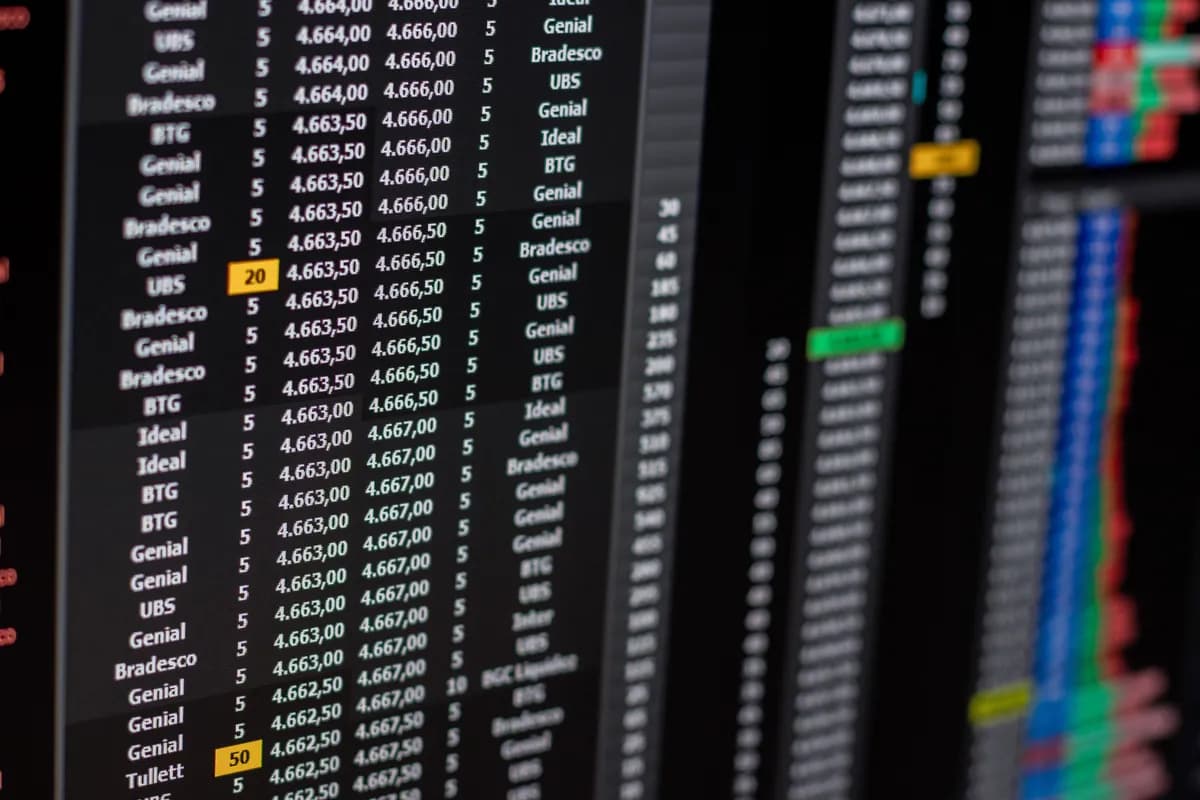
How it fails. For most retail traders it does not fail — it is simply irrelevant. If your order is not large enough to affect the book, an iceberg does nothing but complicate your execution and, on some venues, worsen your queue priority. Understanding icebergs is useful for reading the market, not for trading it: hidden liquidity means the depth you see on screen is not the depth that actually exists.
TWAP and VWAP orders
Algorithmic orders that slice a large parent order into children executed over a defined window — evenly across time (TWAP) or weighted by volume (VWAP).
When it helps. Building or unwinding a position too large to execute at once, when your goal is to match an average price rather than to time an entry.
How it fails. They are indifferent to your view. A VWAP order will patiently buy into a collapse because it is optimising against a benchmark, not against being right. Note also that a VWAP order and the VWAP indicator are related but not the same thing: one is an execution schedule, the other is a reference price.
Time-in-force: the modifier everyone ignores
Not an order type, but it changes the behaviour of all of them.
| Setting | Meaning |
|---|---|
| DAY | Cancelled at session close |
| GTC | Stays live until filled or cancelled |
| IOC | Fill what you can immediately, cancel the rest |
| FOK | Fill entirely and immediately, or cancel |
A GTC stop left running through a weekend gap and a DAY stop that quietly expired at the close are two very different risk profiles. Most traders who discover this discover it the hard way.
What to actually adopt
Ranked by value added per unit of complexity, for a discretionary retail trader:
- Bracket orders. Makes stop discipline structural instead of behavioural.
- OCO. Non-negotiable for any unattended position.
- Trailing stops, ATR-sized, on close. Only if you trade trends.
- Time-in-force, understood properly. Free, and prevents an entire class of accident.
Iceberg, TWAP and VWAP orders solve problems retail size does not have. Knowing what they are helps you read a book. Using them helps almost nobody.
Measure before you switch
Every claim above is testable on your own data. Which order types you use, and what they cost you in slippage, is measurable — if you record the order type on each execution.
That is one extra field in your trade blotter, and it answers a question most traders never even ask: are my market entries costing me more than my limit entries fail to get filled?
TradeStack records order type alongside price, size and fees, so slippage by order type stops being an opinion.
TradeStack uses manual entry. There is no automatic broker import — you record what actually filled, which is the only version worth analysing.
Key takeaways
- Every advanced order is "if X, send Y, cancel Z". Ask who evaluates X.
- Brackets remove the possibility of moving your stop. That is their real value.
- Trailing stops always give back part of the move. That is the price, not a bug.
- Stop-limit protects fill quality, never your account.
- Iceberg, TWAP and VWAP solve institutional problems. Read them, don't use them.
- Time-in-force is the free setting that causes the most expensive surprises.